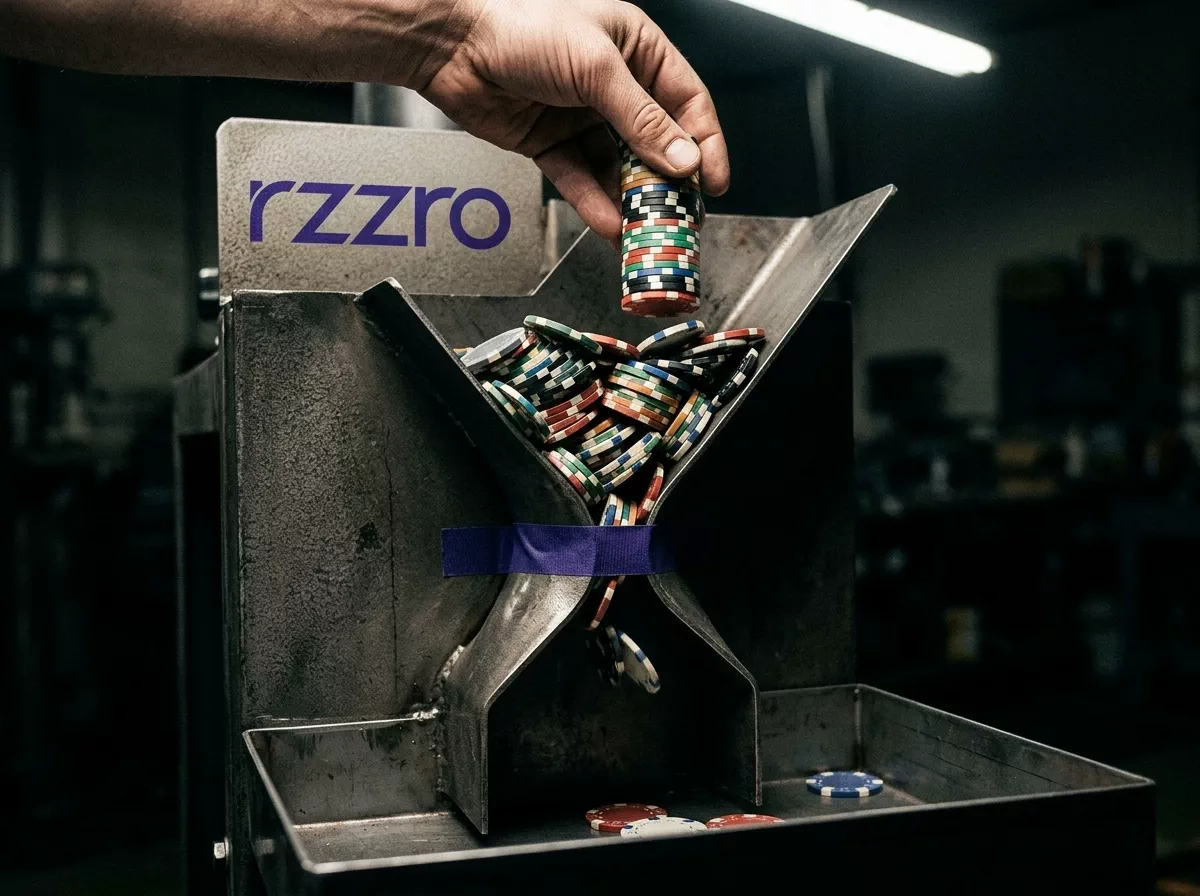
Every procurement leader has experienced the meeting. Procurement reports $4.2 million in savings for the quarter. Finance reviews the P&L and finds $1.8 million. The gap is $2.4 million — more than half of what was claimed. Finance says the methodology is wrong. Procurement says finance does not understand what savings look like. Both are partially right, and both are missing the structural problem.
The evidence is consistent across multiple sources. McKinsey's procurement transformation research found the average savings pipeline loses roughly one-third of its estimated value in planning and another 20% in execution. Suplari pegs the negotiated-to-realized spread at 30-40%. Efficio Consulting reports leakage of 50% or more when organizations do not proactively manage the gap. The merged estimate: between 45% and 60% of negotiated savings never reach the P&L.
How the failure unfolds: the four stages of savings leakage
Root cause 1: measurement infrastructure that guarantees disagreement
Procurement and finance use different baselines, different timeframes, and different definitions, then act surprised when the numbers do not match. Procurement calculates savings against last price paid, market index, or best alternative. Finance calculates against the budget. Both methodologies are defensible. Neither reconciles with the other.
The problem compounds with spreadsheet-based tracking. Simfoni identifies three root causes in its procurement savings methodology research: baseline disagreements between procurement and finance, timing differences between when savings are negotiated and when they materialize, and inconsistent tracking methodology that makes aggregation impossible. When savings data lives in Excel files maintained by individual category managers — each using their own baseline assumptions — the margin for error grows with every new sheet.
Stampli's research on savings tracking confirms that the most common point of dispute is the baseline itself. A price reduced from $100 to $90 against a last-price-paid baseline of $100 is a 10% saving. Against a budgeted baseline of $95, it is a 5.3% saving. Both numbers are correct. Neither is the number procurement reported to leadership. The gap is not dishonesty. It is infrastructure — specifically, the absence of one.
Root cause 2: post-contract compliance collapse
Procurement resources concentrate at the front end of the sourcing cycle: market research, RFP, negotiation, contract signature. After signature, procurement moves to the next event. Efficio Consulting identifies this as the single largest leakage point: "Post-contract compliance is where most savings disappear. Business units continue ordering from incumbent suppliers at legacy rates. Nobody tracks whether the new contract terms are actually applied to the invoices."
The Hackett Group's maverick spend research quantifies the consequence: 10-20% of targeted savings are lost to off-contract buying. Organizations with mature compliance tracking reduce this to single digits. Organizations without it lose the savings before the second invoice cycle.
The fix is specific, not aspirational. Three-way match systems catch invoice/PO discrepancies but do not catch contract/PO discrepancies. A purchase order at the old price matched to a goods receipt and an invoice at the old price passes all three checks and still leaks savings. The missing control is a contract-to-PO price validation — a check that the price on the PO matches the price in the active contract. Few organizations have it.
Root cause 3: classification conflation — when three different numbers become one
Procurement dashboards routinely combine hard savings, soft savings, and cost avoidance into a single "savings" number. Finance only recognizes hard savings that reduce a budget line item on the P&L. Suplari's research on cost avoidance documents the predictable outcome: "Finance simply refused to recognize cost avoidance figures. Procurement reports them anyway because they represent real value protected. Both sides dig in, and the credibility of the entire savings number erodes."
The classification problem is structural. A price reduction from $100 to $90 is hard savings — the P&L line item drops by $10 per unit. A price-freeze clause that avoids a planned 8% increase is cost avoidance — real value protected, but invisible against the current baseline. A specification change that reduces consumption from 1,000 to 900 units is demand management — savings that procurement enabled but operations executed. All three belong in procurement's dashboard. None of the three should be reported as the same thing to the CFO.
What stops the leakage: the Stage Four model
Organizations that close the savings gap operate at what Suplari calls "Stage Four" maturity: identify savings opportunities, track implementation through contract signature, measure realization through invoice validation, and validate attribution with independent FP&A sign-off. Stage Four organizations deliver 75-85% of identified potential compared to the 50% typical of peers.
The model requires three structural changes. First, a co-defined savings methodology with finance before any sourcing initiative launches. The baseline, the measurement period, and the attribution rules are agreed upfront — not debated after the savings number is reported.
Second, closed-loop tracking from contract to PO to invoice to payment. Systems that flag gaps in real time, not quarterly spreadsheet reconciliations. The contract-to-PO price validation is the single highest-impact control most organizations lack.
Third, separate reporting for separate savings types. Hard savings in the format finance recognizes. Cost avoidance with documented assumptions. Demand management co-signed by the business unit. No combined number. No aggregated dashboard. Three lines, three owners, three validation paths.
Early warning signals
- Maverick spend rising in categories with recently signed contracts — the contract exists but buying behavior did not change.
- Invoice prices not matching negotiated contract rates in spot-checks — the gap is not a one-off, it is systematic.
- Budget holders not reforecasting after procurement reports savings — they do not believe the number will materialize.
- Savings reported in procurement dashboards with no corresponding P&L movement within two quarters.
- Category managers spending more time defending the savings methodology than executing new sourcing events.
FAQ
Why do procurement savings fail to reach the P&L?
Between 45-60% of negotiated procurement savings never materialize in financial statements. Three root causes: procurement and finance measure savings against different baselines, nobody tracks contract compliance after signature, and hard savings, soft savings, and cost avoidance get conflated into one number finance cannot validate.
What is the difference between hard savings and cost avoidance?
Hard savings are actual reductions in current spend visible on the P&L — a price negotiated from $100K to $90K. Cost avoidance prevents future cost increases and is not visible against the current baseline — locking in prices to avoid a planned increase. Finance typically only recognizes hard savings for budget purposes.
How can procurement prove savings hit the P&L?
Co-define the savings methodology with finance before any initiative launches. Track savings through the full contract-to-invoice lifecycle — not just at contract signature. Use FP&A to independently validate baselines and realized savings. Report hard savings, soft savings, and cost avoidance separately in the financial context finance recognizes.
Sources
- Suplari — Realize Savings in Procurement (April 2026). McKinsey pipeline loss data: ~33% planning loss + ~20% execution loss.
- Suplari — Cost Savings vs. Cost Avoidance (April 2026). Stage Four organizations deliver 75-85% of identified savings.
- Efficio Consulting — Where Did Those Procurement Savings Go? (August 2024). 50%+ leakage, post-contract compliance gap.
- Simfoni — Procurement Savings: How to Define, Measure, and Report (June 2026). Three root causes: baseline disagreements, timing, tracking methodology.
- Stampli — What Counts as Procurement Savings? (June 2026). Conflating savings types as root of disputes.
- Suplari — Cost Savings Tracking Tools for Procurement (April 2026). Spreadsheets as root cause, closed-loop infrastructure.