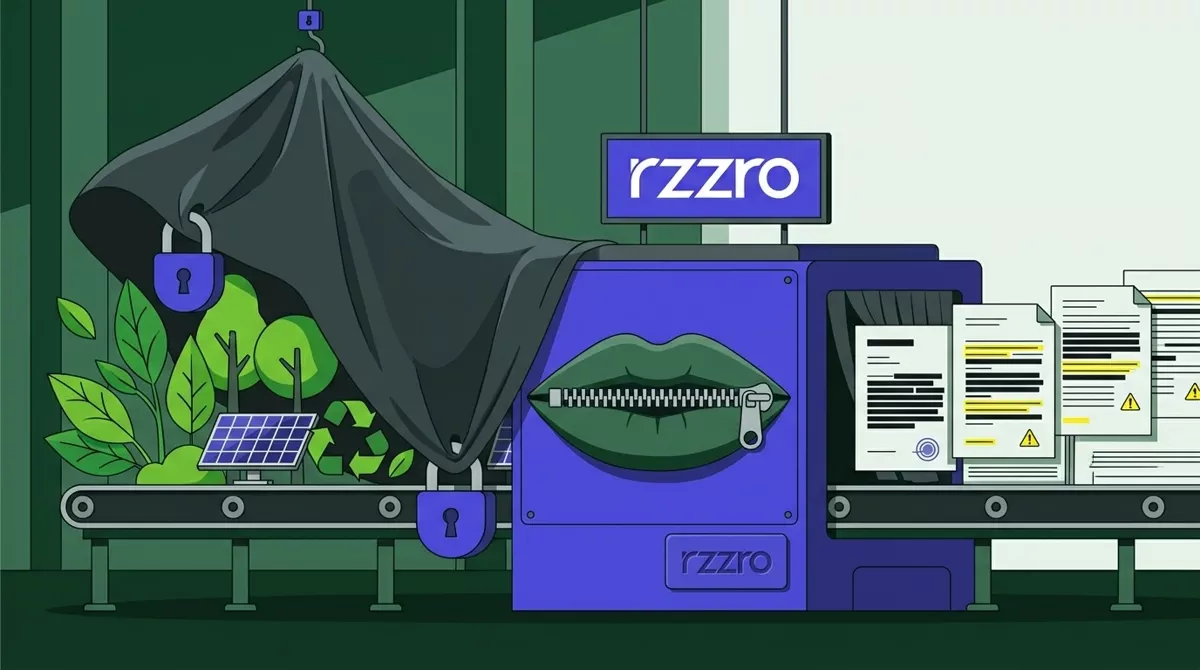
In 9 of 14 major sectors, companies are intentionally decreasing their climate communications. Fifty-eight percent of surveyed firms plan to scale communications down further, and 18% have no intention of communicating at all. This is greenhushing — the systematic reduction of public ESG discourse while sustainability work continues behind the scenes. For procurement teams, it is not a reputational strategy. It is a compliance time bomb.
The logic seems sound on the surface: reduce external ESG claims, reduce the surface area for criticism, litigation, and regulatory scrutiny. But in 2026, the regulations that matter — the EU Corporate Sustainability Reporting Directive (CSRD), the German Supply Chain Due Diligence Act, and emerging Scope 3 disclosure mandates — do not depend on what a company chooses to communicate. They depend on what a company's supply chain actually does.
The split between what you report and what you owe
Greenhushing creates a dangerous asymmetry. The procurement team continues collecting supplier ESG data — emissions, labor practice audits, conflict mineral declarations — because operations still require it. Supplier contracts still contain sustainability clauses. But the executive decision to reduce public communication means this data never gets structured, validated, or presented in a form that would survive a regulatory audit.
The BuyingStation 2026 procurement trends report confirms that procurement teams face greater emphasis on Scope 3 emissions, ethical labor practices across the supply chain, and circular economy criteria. These requirements do not disappear when the annual sustainability report gets shorter. Procurement is still accountable for them. The difference is that under greenhushing, the accountability has no documentation trail.
Which regulations still apply when you stop talking
The EU CSRD, effective for large companies from 2025, requires detailed disclosure of sustainability matters including supply chain due diligence. The German Supply Chain Act imposes fines of up to 2% of annual global turnover for non-compliance with human rights and environmental due diligence obligations. Neither regulation contains an exception for companies that have chosen to communicate less.
KPMG's supply chain outlook for 2025-2026 identifies regulatory, geopolitical, and AI-related risks as key pressure points. Procurement is being pushed into a "24/7 risk orchestrator" role, not a buyer that escalates when something breaks. That role requires continuous evidence collection, not selective communication. Per the KodiakHub 2026 procurement trends report, procurement organizations are expected to run scenario simulations for events like tier-2 supplier failures and logistics corridor closures. None of this works without documented, auditable supplier data.
What procurement teams should do now
The window between greenhushing and regulatory enforcement is closing. Procurement teams that have reduced their ESG reporting posture need to rebuild the compliance infrastructure that supports it — even if the C-suite does not want external communication.
- Separate mandatory reporting from voluntary marketing. The CSRD and Supply Chain Act require disclosure regardless of your PR strategy. Create a compliance-only reporting pipeline that operates independently of the corporate communications calendar. If the marketing team wants to go quiet, the compliance data still flows.
- Maintain internal ESG scorecards even if external reports shrink. Procurement Tactics 2026 reports that "Digital Masters" spend up to 24% of procurement budgets on technology precisely because platforms provide the data backbone for this kind of ongoing compliance. The scorecards don't need to be public to be operational.
- Document the supplier due diligence chain now. If a regulator or customer audit occurs in 2027, the evidence needs to exist from 2026. You cannot reconstruct a year of supplier audits retroactively. The OECD finding that 58% of companies are decreasing communications does not mean those companies are compliant — it means they are less likely to detect and fix non-compliance before it becomes an enforcement event.
- Integrate procurement compliance data with legal and finance. Nearly 48% of CFOs already use procurement data for broader financial strategy including fraud detection and cost optimization, per PLANERGY's 2025 procurement trends analysis. ESG compliance data should follow the same path — integrated into enterprise risk management, not siloed in a procurement spreadsheet that nobody outside the function ever sees.
What this means for CPOs
Greenhushing is a C-suite decision that lands hardest on procurement. Marketing can stop publishing sustainability reports with a memo. Procurement cannot stop managing supplier ESG risk without violating contracts, regulations, and audit requirements. The disconnect between what the company says publicly and what procurement must do operationally is the compliance gap that enforcement actions exploit.
CPOs should treat greenhushing as a risk register item — not a communications topic. The question is not whether to publish the supplier sustainability report. The question is whether, if a regulator asks for it tomorrow, procurement can produce evidence that due diligence was performed, risks were assessed, and corrective actions were taken. In most organizations practicing greenhushing, the answer is no.
What is greenhushing in procurement?
Greenhushing is the practice of decreasing or stopping public communication about sustainability and climate efforts while continuing the underlying work. In procurement, it means teams are tracking supplier ESG performance, Scope 3 emissions, and compliance metrics internally but not reporting or disclosing the results. An OECD review found 58% of surveyed companies are decreasing communications and 18% have no intention of communicating.
Does greenhushing create legal risk for procurement teams?
Yes. Regulations like the EU Corporate Sustainability Reporting Directive (CSRD) and the German Supply Chain Due Diligence Act impose mandatory disclosure and due diligence obligations regardless of whether a company publicly communicates its efforts. Reducing communication does not reduce the underlying legal obligation — it only reduces the visibility of compliance gaps that may later trigger enforcement action.
How should procurement teams handle ESG reporting in a greenhushing environment?
Three steps: (1) separate regulatory-mandatory reporting from voluntary marketing — the former is not optional and cannot be 'hushed', (2) maintain internal ESG scorecards even if external communications are reduced, and (3) document procurement's supplier due diligence chain so that if a regulator or customer audit occurs, the evidence trail exists regardless of public posture.
Sources
- Procurement Tactics — 12 Procurement Trends Set to Reshape 2026. South Pole Net Zero Report and OECD review cited: 58% decreasing communications, 18% no intention to communicate. Accessed June 23, 2026.
- BuyingStation — What Does 2026 Have in Store for Procurement?. Scope 3 emphasis, ethical labor, circular economy criteria. Accessed June 23, 2026.
- KodiakHub — Top 10 Procurement Trends to Watch in 2026. KPMG supply chain outlook, 24/7 risk orchestrator concept, scenario simulation. Accessed June 23, 2026.
- PLANERGY — Procurement Trends 2025. 48% of CFOs using procurement data for broader financial strategy. Accessed June 23, 2026.
- Precoro — Top 10 Procurement Trends in 2026. Procurement orchestration and supplier ecosystem trends. Accessed June 23, 2026.
- Inverto/BCG — Procurement Trends 2026. CPO role expansion, supplier ecosystem development. Accessed June 23, 2026.