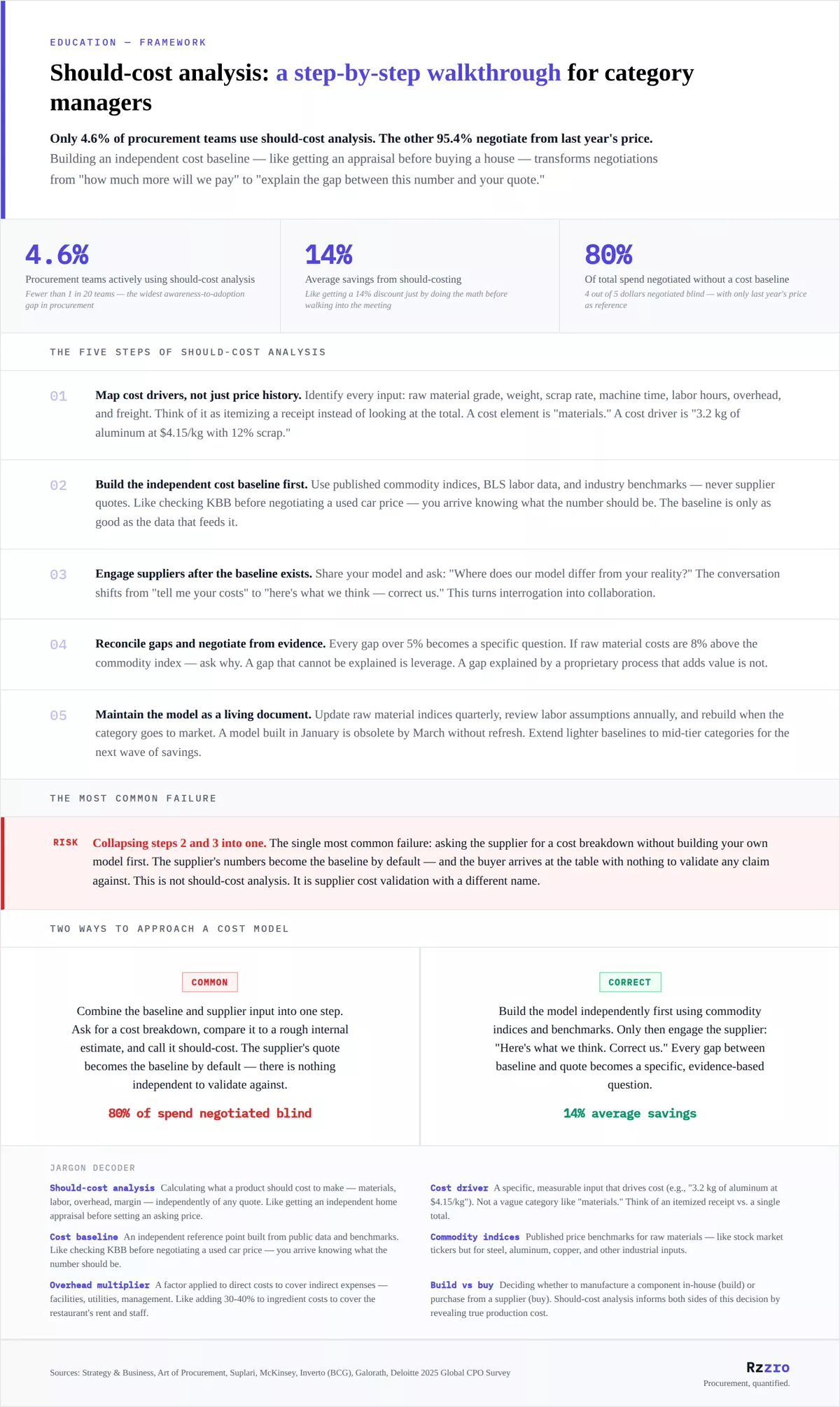
Should-cost analysis Calculating what a product should cost to make — materials, labor, overhead, margin — independently of any quote. Like getting an independent home appraisal before setting an asking price.
Cost driver A specific, measurable input that drives cost (e.g., "3.2 kg of aluminum at $4.15/kg"). Not a vague category like "materials." Think of an itemized receipt vs. a single total.
Cost baseline An independent reference point built from public data and benchmarks. Like checking KBB before negotiating a used car price — you arrive knowing what the number should be.
Commodity indices Published price benchmarks for raw materials — like stock market tickers but for steel, aluminum, copper, and other industrial inputs.
Overhead multiplier A factor applied to direct costs to cover indirect expenses — facilities, utilities, management. Like adding 30-40% to ingredient costs to cover the restaurant's rent and staff.
Build vs buy Deciding whether to manufacture a component in-house (build) or purchase from a supplier (buy). Should-cost analysis informs both sides of this decision by revealing true production cost.