Download Image
Education — Failure Pattern

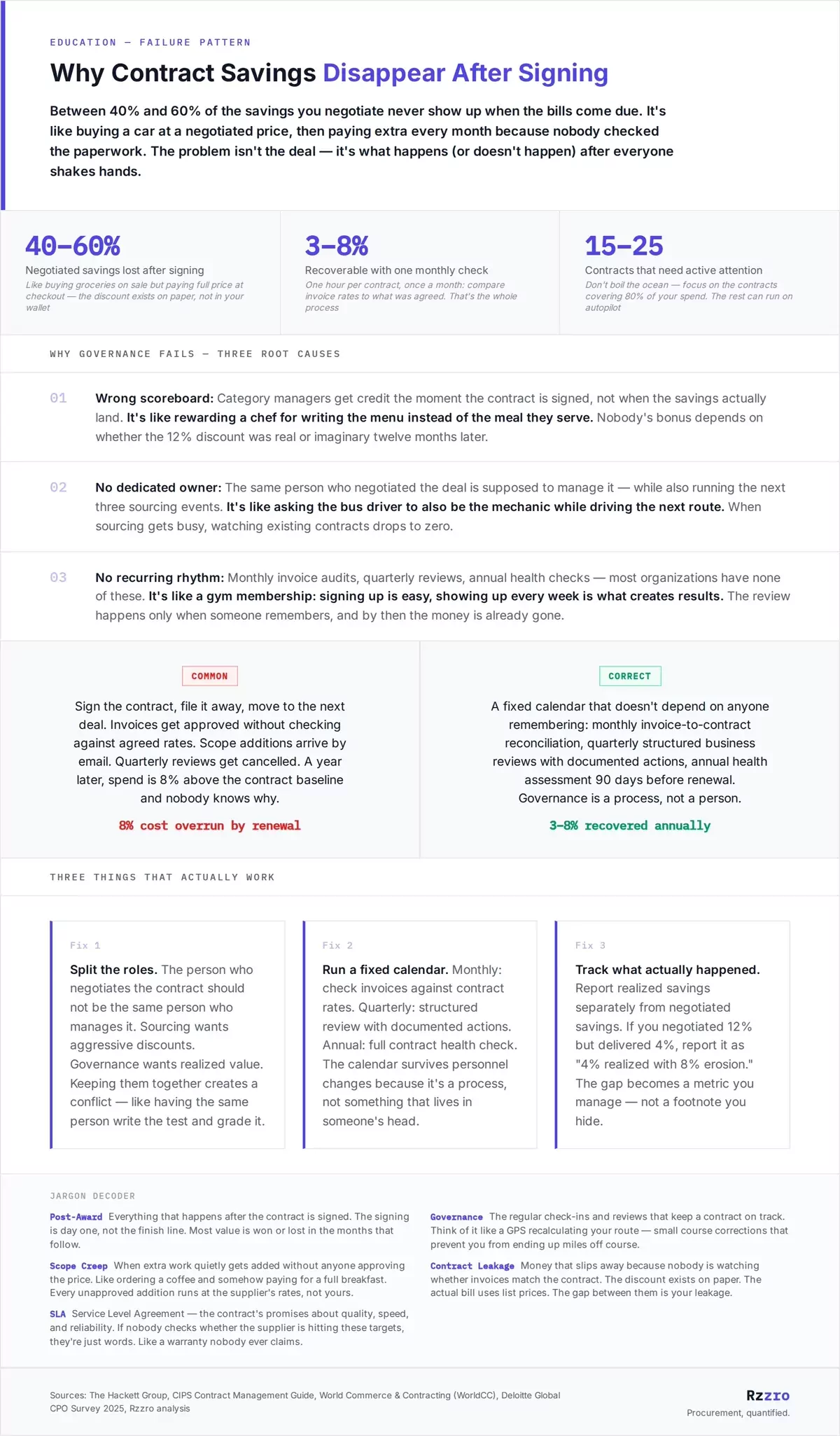
Why Contract Savings Disappear After Signing

Between 40% and 60% of the savings you negotiate never show up when the bills come due. It's like buying a car at a negotiated price, then paying extra every month because nobody checked the paperwork. The problem isn't the deal — it's what happens (or doesn't happen) after everyone shakes hands.
40–60%
Negotiated savings lost after signing
Like buying groceries on sale but paying full price at checkout — the discount exists on paper, not in your wallet
3–8%
Recoverable with one monthly check
One hour per contract, once a month: compare invoice rates to what was agreed. That's the whole process
15–25
Contracts that need active attention
Don't boil the ocean — focus on the contracts covering 80% of your spend. The rest can run on autopilot
01
Wrong scoreboard: Category managers get credit the moment the contract is signed, not when the savings actually land. It's like rewarding a chef for writing the menu instead of the meal they serve. Nobody's bonus depends on whether the 12% discount was real or imaginary twelve months later.
02
No dedicated owner: The same person who negotiated the deal is supposed to manage it — while also running the next three sourcing events. It's like asking the bus driver to also be the mechanic while driving the next route. When sourcing gets busy, watching existing contracts drops to zero.
03
No recurring rhythm: Monthly invoice audits, quarterly reviews, annual health checks — most organizations have none of these. It's like a gym membership: signing up is easy, showing up every week is what creates results. The review happens only when someone remembers, and by then the money is already gone.
Common
Sign the contract, file it away, move to the next deal. Invoices get approved without checking against agreed rates. Scope additions arrive by email. Quarterly reviews get cancelled. A year later, spend is 8% above the contract baseline and nobody knows why.
8% cost overrun by renewal
Correct
A fixed calendar that doesn't depend on anyone remembering: monthly invoice-to-contract reconciliation, quarterly structured business reviews with documented actions, annual health assessment 90 days before renewal. Governance is a process, not a person.
3–8% recovered annually
Fix 1
Split the roles. The person who negotiates the contract should not be the same person who manages it. Sourcing wants aggressive discounts. Governance wants realized value. Keeping them together creates a conflict — like having the same person write the test and grade it.
Fix 2
Run a fixed calendar. Monthly: check invoices against contract rates. Quarterly: structured review with documented actions. Annual: full contract health check. The calendar survives personnel changes because it's a process, not something that lives in someone's head.
Fix 3
Track what actually happened. Report realized savings separately from negotiated savings. If you negotiated 12% but delivered 4%, report it as "4% realized with 8% erosion." The gap becomes a metric you manage — not a footnote you hide.
Jargon Decoder
Post-Award Everything that happens after the contract is signed. The signing is day one, not the finish line. Most value is won or lost in the months that follow.
Governance The regular check-ins and reviews that keep a contract on track. Think of it like a GPS recalculating your route — small course corrections that prevent you from ending up miles off course.
Scope Creep When extra work quietly gets added without anyone approving the price. Like ordering a coffee and somehow paying for a full breakfast. Every unapproved addition runs at the supplier's rates, not yours.
Contract Leakage Money that slips away because nobody is watching whether invoices match the contract. The discount exists on paper. The actual bill uses list prices. The gap between them is your leakage.
SLA Service Level Agreement — the contract's promises about quality, speed, and reliability. If nobody checks whether the supplier is hitting these targets, they're just words. Like a warranty nobody ever claims.
Sources: The Hackett Group, CIPS Contract Management Guide, World Commerce & Contracting (WorldCC), Deloitte Global CPO Survey 2025, Rzzro analysis
Rzzro
Procurement, quantified.