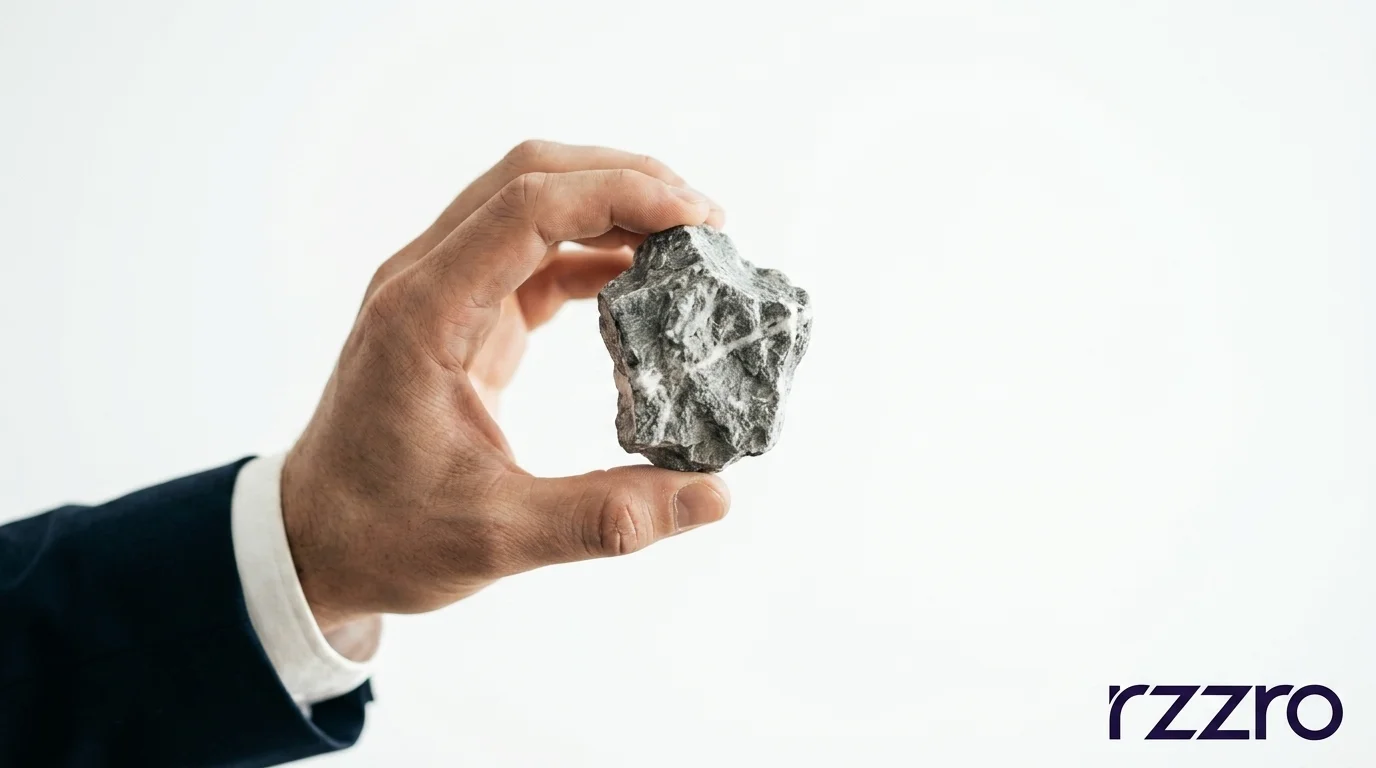
The energy transition runs on minerals, not just electrons. A single EV battery contains lithium, cobalt, nickel, manganese, and graphite. A wind turbine requires rare earth elements for its permanent magnets. A solar panel depends on copper and silver. By 2040, the International Energy Agency projects that total mineral demand for clean energy technologies could quadruple — with lithium demand growing over 40 times and graphite demand over 20 times from 2024 levels .
But the geography of supply is dangerously concentrated. China controls roughly 60% of global lithium chemical processing, 70% of cobalt refining, 90% of rare earth processing, and nearly 100% of natural graphite processing into spherical graphite used in battery anodes . The Democratic Republic of Congo produces over 70% of the world's cobalt, with Chinese entities controlling a majority of production and refining capacity .
For CPOs in manufacturing, automotive, energy, and electronics, this concentration is not an academic concern. It is a direct threat to supply continuity, cost stability, and regulatory compliance. The question is no longer whether to diversify. The question is how — and how fast.
China's Processing Monopoly: The Numbers Behind the Risk
Control of mining is only part of the picture. What matters more is control of processing — the refining, chemical conversion, and material production stages where value is added and supply bottlenecks form. On nearly every metric, China's position is structural, not circumstantial.
In lithium, China refines roughly 60% of global output, almost all of it from Australian spodumene and South American brines. Australia is the largest lithium miner by volume, but nearly all its output is processed in China . In cobalt, Chinese companies own or operate over 70% of global refining capacity, much of it concentrated in Guangxi and Zhejiang provinces . In rare earths, China accounts for 70% of global mining and 90% of processing, and its dominance extends to downstream magnet manufacturing, where it controls over 90% of the permanent magnet market .
Graphite presents an even starker picture. China produces roughly 75% of natural graphite globally and processes nearly 100% of it into the spherical graphite used in EV battery anodes . In December 2024, China imposed export controls on graphite, requiring special licenses for shipments — a move that sent immediate shockwaves through battery supply chains .
Copper, while less concentrated than other critical minerals, carries its own vulnerabilities. Chile and Peru account for roughly 40% of global mine production. China processes over 50% of global refined copper and consumes more than half of the world's copper output . The IEA warns of potential copper supply deficits as early as 2030, driven by electrification demand .
The Regulatory Map Has Changed: IRA and CRMA Requirements
Procurement leaders now face two parallel regulatory frameworks that directly determine which mineral sources are permissible — and which are effectively blocked from major markets.
The US Inflation Reduction Act
The IRA's Section 30D clean vehicle tax credit imposes escalating sourcing requirements for critical minerals. To qualify for the full $7,500 credit, a percentage of the critical minerals in a battery must be extracted or processed in the US or a country with a US free trade agreement, or recycled in North America. The percentage starts at 40% in 2024 and rises to 80% by 2027 .
The IRA also prohibits battery components manufactured by a Foreign Entity of Concern (FEOC) — a category that captures many Chinese state-owned and party-linked enterprises. Beginning in 2025 for battery components and 2026 for critical minerals, vehicles containing FEOC-produced materials are excluded from the credit .
The practical effect is clear: OEMs and battery manufacturers must build supply chains that bypass China's processing infrastructure entirely. That is a multi-year, multi-billion-dollar undertaking. In 2024, the US Department of Energy estimated that fewer than 20% of EV batteries met the IRA's FEOC requirements for critical minerals .
The EU Critical Raw Materials Act
The CRMA, adopted in 2024, sets binding benchmarks: by 2030, the EU must source at least 10% of its annual strategic raw material consumption from extraction within the bloc, 40% from processing within the EU, and 25% from recycling. No single third country can supply more than 65% of the EU's annual consumption of any strategic raw material at any relevant processing stage .
The 65% cap directly targets China's dominance. For any CPO sourcing critical minerals into EU operations, compliance means establishing non-China supply pathways for lithium, cobalt, rare earths, and graphite by 2030. The regulation carries permitting timelines: strategic projects must receive permits within 27 months for extraction and 15 months for processing .
Alternative Sources: Where New Capacity Is Emerging
Diversification is already underway. Dozens of critical mineral projects are advancing across North America, Europe, Australia, South America, and Africa. The question for procurement leaders is which projects will reach production on a timeline that matches regulatory deadlines.
Lithium: The US has two operating lithium mines — Silver Peak in Nevada and the newly opened Thacker Pass in Nevada, with a third, Piedmont Lithium in North Carolina, advancing through permitting . Australia remains the largest producer of spodumene concentrate, and new refinery capacity is being built in the UK (Green Lithium), Germany (Vulcan Energy), and the US (Lithium Americas, Albemarle) to process it outside China . Argentina's brine-based lithium production is expanding rapidly, with projects in Salta and Jujuy provinces attracting investment from South Korean and Japanese battery makers .
Cobalt: Efforts to reduce DRC dependence focus on three strategies: developing alternative sources (Australia's Sunrise Mine, Canada's Vale operations), advancing nickel-cobalt laterite processing in Indonesia, and accelerating battery chemistry shifts toward low-cobalt and cobalt-free cathodes (LFP, LMFP) . Indonesia has become the second-largest cobalt producer globally, with output growing from negligible levels in 2020 to over 50,000 tonnes in 2024, much of it processed by Chinese-owned plants .
Rare Earths: MP Materials in California restarted domestic rare earth production in 2024 and is building downstream magnet manufacturing capacity in Texas. Australia's Lynas Rare Earths operates a processing plant in Western Australia and is expanding into Kalgoorlie and Mount Weld. Canada's Nechalacho project (Vital Metals) and the proposed Makuutu project in Uganda are advancing . But even with these projects, non-China rare earth supply will remain constrained through 2028 at the earliest .
Graphite: The near-total Chinese monopoly on spherical graphite has spurred new investment. Syrah Resources operates a graphite mine in Mozambique and is building a downstream processing plant in Vidalia, Louisiana, with support from a $220 million DOE loan. Canada's Novonix and Graphite One are developing anode material facilities in the US and Canada. Northern Graphite's Lac des Îles mine in Quebec is one of the few non-China sources of flake graphite .
Long-Term Contracting: The New Playbook for CPOs
Spot market purchasing for critical minerals is increasingly untenable. Price volatility, supply concentration, and regulatory risk demand a fundamentally different approach to contracting. The firms that are securing supply most effectively are deploying three structural strategies.
- Long-term offtake agreements with price mechanisms. Automotive and battery OEMs are signing 5- to 10-year offtake agreements with miners and processors, often with price floors and ceilings indexed to production costs rather than volatile spot prices. Ford, GM, Tesla, and Volkswagen have all signed multi-billion-dollar lithium offtake agreements since 2023. These contracts include conditions on processing origin to ensure IRA and CRMA compliance .
- Equity investments and joint ventures upstream. Rather than relying on third-party supply agreements, an increasing number of OEMs are taking direct equity stakes in mining and processing projects. Stellantis invested in Argentina's Lithium Argentina. Tesla has discussed acquiring ownership in lithium refiners. South Korea's LG Energy Solution and POSCO have jointly invested in Australian and Canadian critical mineral assets . These investments give CPOs visibility and influence over processing location, ESG standards, and cost structure.
- Multi-sourcing with geographic diversification. The single-source model is being replaced by portfolios of suppliers across multiple jurisdictions. A battery manufacturer targeting IRA compliance might source lithium from Australia (processed in the US), cobalt from Canada, and graphite from Mozambique (processed in Louisiana). A European OEM would add sources from Portugal, Finland, and the UK to comply with CRMA's 65% cap .
What CPOs Should Do in the Next 18 Months
Procurement leaders cannot control geological endowment or geopolitics. But they can control their sourcing architecture. The following seven actions represent a practical, sequenced response to the critical minerals supply challenge.
- Map your critical mineral exposure end-to-end. Identify every critical mineral that enters your supply chain, including tier-2 and tier-3 suppliers. Quantify volumes, processing locations, and country-of-origin for each mineral. This baseline is a prerequisite for any compliance or diversification strategy .
- Run scenario models against IRA and CRMA timelines. Model your supply chain against 2025, 2026, 2027, and 2030 regulatory deadlines. Identify where FEOC exposure exists and where you need alternative processing pathways. Use the results to prioritize sourcing decisions .
- Initiate dual-track sourcing for your highest-risk minerals. For lithium, cobalt, rare earths, and graphite, maintain your existing supply relationships while simultaneously qualifying alternative sources. The transition cannot happen overnight — but it cannot start tomorrow, either .
- Begin offtake negotiations with a 5-year minimum horizon. Spot-based purchasing is a liability. Move to structured offtake agreements that include price mechanisms, origin conditions, and ESG requirements. Tie supplier selection to verified processing certifications .
- Evaluate equity or joint venture positions in processing capacity. The most secure supply chains in critical minerals are those where buyers have direct governance rights over processing. Evaluate strategic investments in US, EU, Australian, and Canadian processing projects .
- Build recycling and circular supply into your mineral strategy. Both the IRA and CRMA incentivize recycled content. Investing in battery recycling and mineral recovery now builds a domestic secondary supply stream that reduces primary mineral dependence. By 2040, recycling could supply 20-30% of lithium, cobalt, and nickel demand .
- Establish a cross-functional critical minerals council. This issue spans procurement, legal, regulatory, finance, strategy, and ESG. Create a formal governance structure with decision rights, meeting cadence, and executive sponsorship. The firms that act first on critical minerals will have a procurement advantage that compounds over time .
Conclusion
The critical minerals supply chain is the most consequential procurement challenge of the energy transition. Supply concentration at the processing stage creates structural vulnerability, while IRA and CRMA regulations impose binding timelines for diversification. The CPOs who treat critical minerals as a strategic portfolio — managed through long-term offtake, equity positions, geographic diversification, and recycling integration — will secure both compliance and competitive advantage.
Those who wait for market conditions to stabilize or for new supply to appear organically will find themselves locked into expensive spot markets, exposed to regulatory exclusion, and dependent on suppliers whose strategic interests do not align with their own. The minerals under the ground matter less than the processing capacity above it — and that processing capacity is being rebuilt now. Procurement leaders need to be at the table.
Frequently Asked Questions
What are critical minerals?
Critical minerals are non-fuel minerals or mineral materials essential to economic or national security whose supply chains are vulnerable to disruption. For the energy transition, the most critical include lithium, cobalt, nickel, rare earth elements, graphite, and copper.
Why is China's processing dominance a procurement risk?
China controls 60-90% of global processing for key critical minerals, creating a single-point-of-failure risk. Export controls (like those imposed on graphite in 2024), geopolitical tension, and regulatory restrictions under the IRA and CRMA all amplify this risk for non-Chinese buyers.
What does the IRA require for critical mineral sourcing?
Section 30D requires a rising percentage of battery critical minerals to be extracted or processed in the US or an FTA partner country (40% in 2024, rising to 80% by 2027). FEOC restrictions phase in for battery components in 2025 and critical minerals in 2026.
What are the EU CRMA's main sourcing targets?
By 2030, the EU targets 10% extraction, 40% processing, and 25% recycling of its strategic raw material consumption. No single third country can supply more than 65% of any strategic raw material at any processing stage.
How long do new critical mineral projects take to develop?
Mining projects typically take 7-15 years from discovery to production. Processing facilities take 3-7 years. Under the CRMA, strategic projects must receive permits within 27 months (extraction) or 15 months (processing).
What contracting strategies work best for critical minerals?
Long-term offtake agreements (5-10 years) with price mechanisms, equity investments in processing capacity, and multi-sourcing across jurisdictions are the three most effective strategies. Spot purchasing is increasingly unsustainable for these materials.